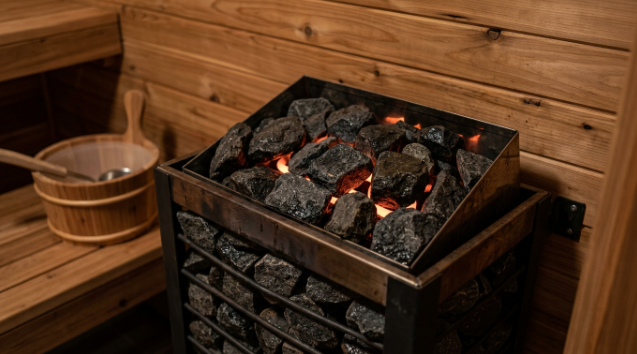
A cabin housing an electric sauna heater needs a level, stable base that keeps the structure off damp ground and lets the electrical run reach the heater safely, and the three most common choices are a pressure-treated wood deck, a paver or concrete pad, and a compacted gravel bed with landscape fabric underneath. Gravel is the cheapest and fastest to install, a paver pad offers the most stable long-term surface, and a deck works best when the sauna sits beside an existing outdoor living space rather than alone in a corner of the yard.
Why Does the Base Matter for a Heater-Equipped Cabin Specifically?
The cabin itself needs to stay level for the door to seal properly and for the heater’s guard rail and clearances to match the spacing the manufacturer specified, since a tilted floor can shift bench and heater positioning enough to violate those clearances over time. A base that traps moisture against the cabin’s floor also shortens the life of the wood and, indirectly, the electrical components running into the structure, since damp wood around a junction box or conduit entry is a slow path to corrosion and eventual electrical problems that have nothing to do with the heater itself.
See also: Red Flags of an Unsafe Peptide Vendor: A Checklist
What Does a Gravel Base Involve?
A gravel base starts with excavating 4 to 6 inches of topsoil, laying landscape fabric to block weeds, and filling with compacted crushed stone, typically a 3/4-inch minus gravel that packs down firmly. This is the least expensive option, often a few hundred dollars in materials for a typical cabin footprint, and it drains well since water passes straight through rather than pooling. The tradeoff is that gravel needs to be properly compacted in layers, not just dumped and leveled by eye, or the base can settle unevenly within the first year and throw the cabin’s level off.
What Does a Paver or Concrete Pad Involve?
A paver pad follows a similar excavation process but adds a compacted gravel sub-base topped with sand and interlocking pavers, or a poured concrete slab for a fully rigid surface. This is the most stable long-term option and the one most likely to keep a heavy cabin, especially one with a full-size heater and stone rock bed adding weight, perfectly level for decades rather than years. It costs more than gravel, often running into the low thousands of dollars depending on size and whether a contractor pours the concrete, but it is also the base most manufacturers recommend when asked directly.
What Does a Wood Deck Base Involve?
A pressure-treated or composite deck works well when the sauna sits adjacent to an existing patio or pool deck, keeping the whole outdoor space visually consistent. The deck needs to be built to handle the cabin’s weight, which is substantial once the heater, rock bed, and benches are all in place, so joist spacing and footings should be sized for that load specifically rather than assumed to match a standard deck built for foot traffic alone. Running the heater’s electrical conduit through or under a wood deck also requires more careful planning than running it through open gravel or a concrete pad, since the conduit path needs to stay protected and accessible for future inspection.
How Close Can the Base and Structure Be to the House or Fence?
Most local codes and manufacturer guidelines call for a minimum clearance, often several feet, between an outdoor sauna cabin and the property line or an adjacent structure, partly for fire separation and partly for basic maintenance access around all four sides of the cabin. This clearance requirement applies regardless of which base material is chosen, and it is worth confirming with local zoning before pouring a permanent concrete pad in a spot that later turns out to violate a setback rule.
Why Does a Stable Base Matter for the Heater’s Long-Term Performance?
A cabin that settles unevenly over a poorly compacted base can develop gaps at the door seal or between wall panels as the structure shifts, and those gaps let heat escape exactly the way a loose-fitting door would, forcing the heater to run longer to hold the same temperature. This matters most for anyone using the sauna the way the underlying research describes, since the studies most often cited on regular sauna use, including a widely read review in Mayo Clinic Proceedings and a systematic review in Evidence-Based Complementary and Alternative Medicine, are built around consistent sessions at a specific target temperature rather than a cabin that runs a little cooler every year as the structure settles. A solid, level base is a small part of the total project cost but a real factor in whether the cabin still performs the way it did on day one several years down the road.
Does the Base Material Affect the Heater’s Electrical Run?
Yes, indirectly. A gravel base often means running conduit in a shallow trench alongside or under the gravel bed, while a concrete pad usually requires the conduit to be set in place before the pour, which means the electrical plan has to be finalized earlier in the project than it does with gravel or a deck. A wood deck typically allows the most flexibility for routing conduit underneath after the fact, since there is open space beneath the deck boards rather than a solid pad to work around. Buyers who plan the base and the electrical run together from the start, rather than treating them as separate projects, generally avoid the costly rework of breaking into a finished pad or deck later. Product pages for SweatDecks electric sauna heaters list weight and clearance specs that are worth checking against the base plan before construction begins, since heater and rock weight varies enough between models to change what a base needs to support.
Frequently Asked Questions
Is gravel a good enough base for an outdoor sauna cabin? Yes, when it is properly excavated, layered with landscape fabric, and compacted in stages. It is the least expensive option and drains well, though it needs more careful installation than simply dumping stone on the ground.
Do I need a concrete pad for a sauna with a heavy heater and rock bed? Not necessarily, but concrete or pavers offer the most stable long-term surface for a heavier setup and are what most manufacturers recommend when asked directly, particularly for larger multi-person cabins.
Can a sauna cabin sit directly on an existing wood deck? Only if the deck’s joists and footings are sized for the cabin’s full loaded weight, including the heater and rock bed. A deck built for foot traffic alone may need reinforcement first.
How far does a sauna cabin need to be from the property line? This varies by local code, but several feet of clearance from the property line and any adjacent structure is common for both fire separation and maintenance access. Checking local zoning before building is worth doing early.
References
- Cardiovascular and Other Health Benefits of Sauna Bathing: A Review of the Evidence, Mayo Clinic Proceedings, 2018
- Clinical Effects of Regular Dry Sauna Bathing: A Systematic Review, Evidence-Based Complementary and Alternative Medicine, 2018
- Benefits and risks of sauna bathing, The American Journal of Medicine, 2001
By Julia Sandoval